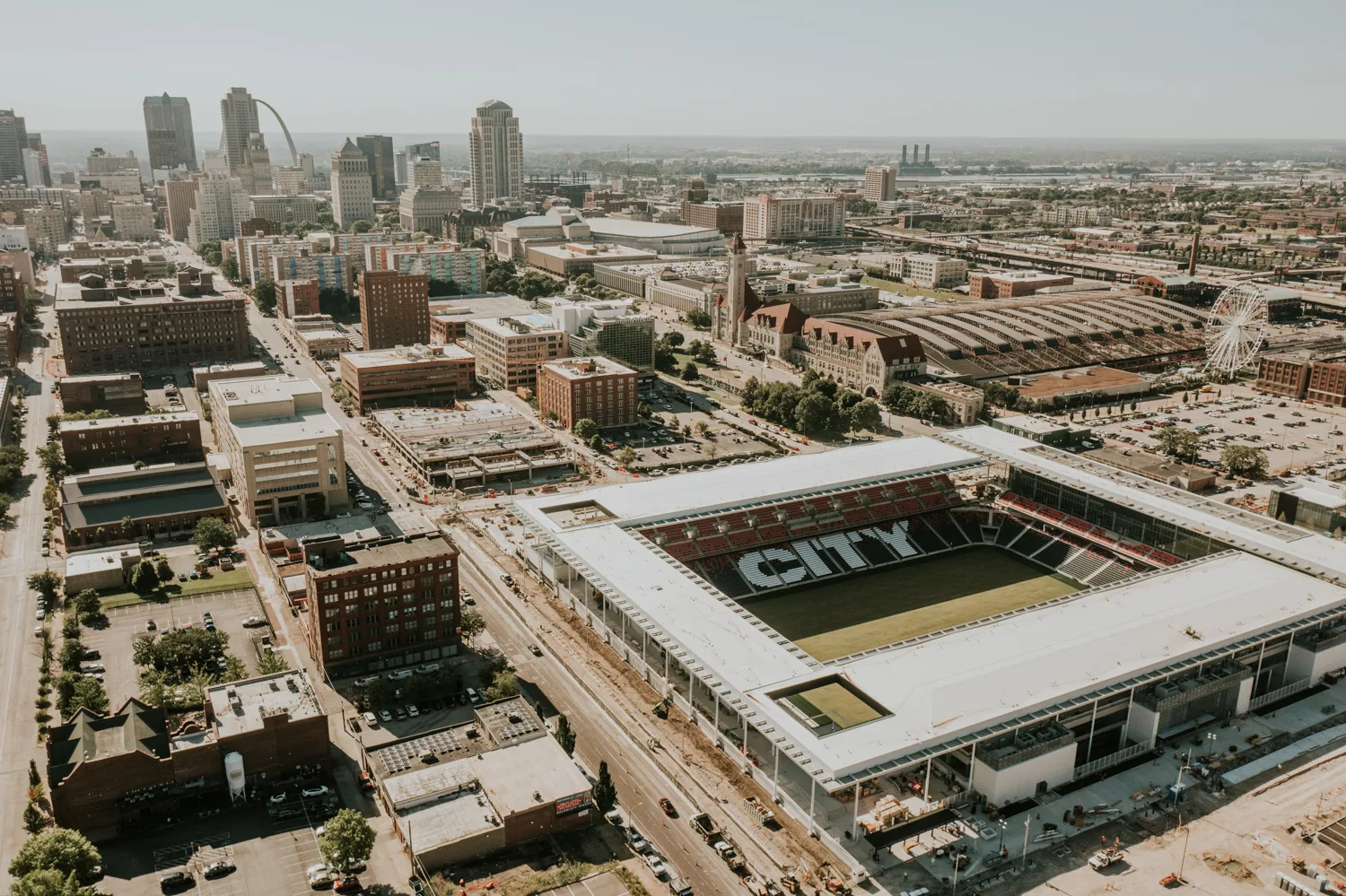
“What to do about downtown?” has been a persistent question for St. Louis in the last decade as massive buildings have fallen vacant and the outside perception of the region’s central core has deteriorated.
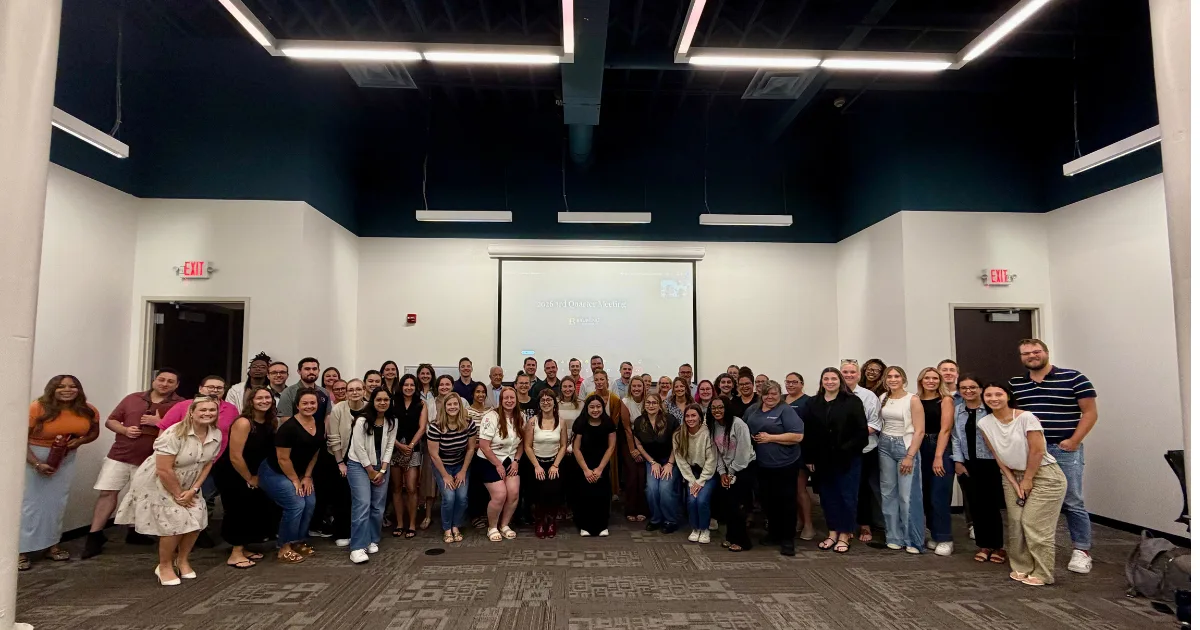
Six developers working on various large scale projects offered their viewpoints and a road map to shift the dominant narrative at a panel Thursday morning hosted by the Urban Land Institute’s St. Louis chapter.
Keep up with local business news and trends
Subscribe to the St. Louis Business newsletter to get the latest insights sent to your inbox every morning.
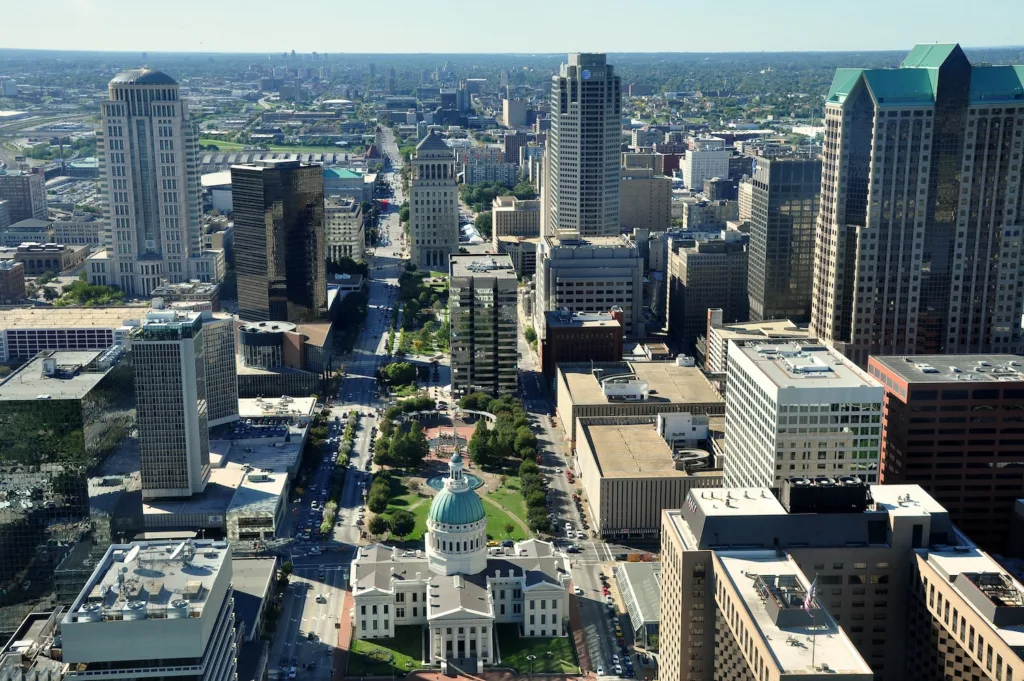
For starters, St. Louis’ downtown is big and packs many things into it (especially if you include Downtown West, which many people do). There are major professional sports venues, entertainment venues, offices, apartments and condos, hotels, restaurants, and retail spaces among others.
“Part of the challenge is we view downtown as one thing,” says Alex Oliver, whose Oliver Properties has redeveloped many multifamily properties along Washington Avenue. “We have an opportunity for each one of these to really thrive and cohesively. That does make for an amazing neighborhood. But each neighborhood pocket within downtown is a unique offering.”
And that means people can have vastly different experiences depending on where they go and who they talk to. Even Thursday’s panel saw some disagreement.
What Oliver calls a “very vibrant neighborhood,” was described to Chalres Goldman, of the Boston-based Goldman Group, as “boring and unsafe” when his development group surveyed downtown residents and those in the broader community. Goldman is the developer eyeing an office-to-residential conversion of the AT&T building, complete with 631 apartments, 100,000 square feet of amenities, and 70,000 square feet of retail and public space.
“I think there’s a consensus that there needs to be more livability and more connectivity,” he says. “Our plan for the building is to bring more notoriety downtown and create what we’re calling ‘sensational social media moments.’”
There are other sticky challenges. For Mike Sarimsakci, of Alterra International, the firm behind the Jefferson Arms redevelopment, the empty office space is “an elephant in the room.”
“Without a clear strategy to attract the next level of corporations, what are you going to do with all this office?” he says. “We need to attract new corporations into St. Louis. Without that, it’s going to be extremely challenging.”
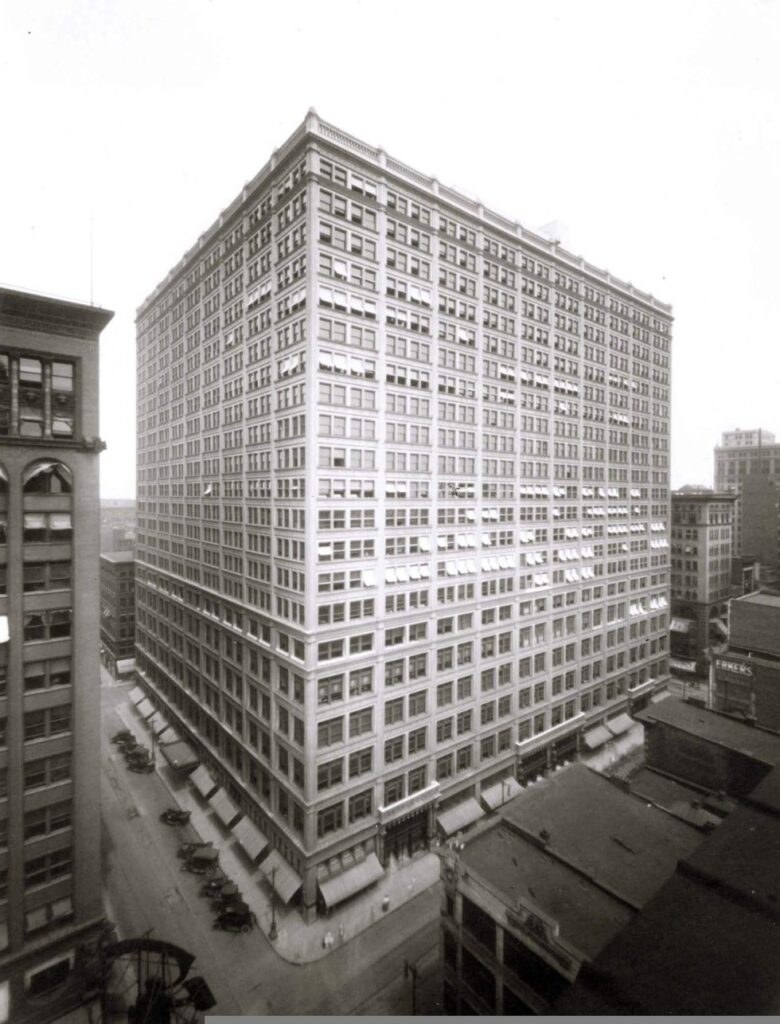
Four million of the 5.5 million square feet of space Goldman’s firm estimates to be vacant downtown is office, even as remote work and ecommerce has fundamentally changed the landscape. He estimates a maximum of 20 percent of the vacant office space downtown could be reoccupied by companies moving forward. That makes conversions to residential critical.
What can help is support from the public sector, like legislation that offers tax credits for major redevelopments or incentive packages, which Goldman says are effective. He also suggests a fast track for permitting where a developer can visit one authority to gain clearances for zoning, planning, building, fire, and other codes.
“To attract a serious level of business, whether it’s corporate office or small business, we need more people and to create more housing, we need an environment that de-risks investment,” Goldman says. “If St. Louis created policies and incentives to de-risk investment and we broadcasted those policies to the broader investment community around the country, there would be a lot more interest.”
Smaller-scale developers could then ride the momentum created by larger projects, says Mike LaMartina, president of Ballpark Village and involved with The Cordish Companies’ $670 million redevelopment of the Millennium Hotel site.
“Anchoring off of larger projects is a good strategy,” LaMartina explains. “There are pockets that work their way down towards Soulard or even work their way up the riverfront. And those are opportunities for smaller developers. There’s smaller buildings and store fronts. There’s smaller parcels that can be reimagined there.”
He contends that gaps between the successful projects downtown need attention as well, saying the city should invest in public infrastructure that connects downtown to help it not feel segmented.
“You can develop all these wonderful housing amenities, entertainment districts, revitalization of neighborhoods, but if it’s not walkable, if it doesn’t drive well, it doesn’t feel safe, and we don’t have those other investments, it doesn’t really serve its purpose,” he says.
To Brian Pratt, a principal at AHM Group, the developer behind Downtown West’s City Commons, there’s an opportunity to lean into pilot programs like the St. Louis Development Corporation’s downtown retail grants, designed to attract more first-floor shops.
“Let’s amplify the intensity of how we go and push these things,” he says. “We cannot put enough momentum behind these efforts. We have to go out further on the edge.”
Pratt admits that some things won’t work out, but instead of focusing on “misses,” it’s important to talk more about what’s been successful.
But in LaMartina’s estimation (and other panelists too), the downtown area suffers from entrenched negative narratives, reinforced every time the news trumpets the latest business or corporation leaving the area. He says people’s negativity can often feel “forced.”
“The number one thing St. Louis can do to help raise their city up is not hide in their small community that shares a narrative that is frankly inaccurate to a relative degree and likely not based on their own personal experience,” LaMartina says.
Though all but one panelist did balk at answering an audience question about how best to help with unhoused people living downtown.
Bob O’Loughlin, of Lodging Hospitality Management, which redeveloped and now manages Union Station, says years of regional civic fragmentation haven’t helped.
“We have all of this great infrastructure throughout our community,” he says. “Everybody has to get behind it and have an identity that says to people from the outside, ‘This is what we’re selling.’”
Oliver contends there already are strong selling points, “a mountain of restaurants, bars, shops, entertainment, and things to do,” plus, in his estimation, billions of dollars of investment already happening.
“That’s really the exciting story of downtown,” he says. “Billions of dollars of redevelopment, construction, entertainment districts and activation is happening in downtown today.”