Karl Marx never made it to St. Louis. Yet if he could catch a glimpse of the current scene, he’d see one of his maxims rings true: History is a series of class conflicts.
The conflicts are related to an ongoing imbroglio that includes the recent taxi cab-versus-Lyft dispute, the citizen quarrel in January over how or when snow should be plowed, and the recurrent low-level friction between bicyclists and motorists.
Get a fresh take on the day’s top news
Subscribe to the St. Louis Daily newsletter for a smart, succinct guide to local news from award-winning journalists Sarah Fenske and Ryan Krull.
Class may be too strong of a word because the animosity seems to be as much about age as income.
One thread that persists through these spats—and promises to continue, if not worsen—is what might be called “hipster-bashing.”
The term “hipster” is amorphous, though the prototype is a young, tech-savvy, bike-riding city resident who wants government to be more responsive to his or her priorities and lifestyle. For many, these “hipsters” have become a frequent target of derision. Much like the derogatory “hoosier” epithet used by local residents to describe uncouth or annoying neighbors, when an under-40 city resident complains too loudly or long, the term “hipster” is tossed out as a shorthand dismissal of the complaint or the complainer.
Historically, the term “hoosier” has been used not only to describe rubes, but more generally to denigrate anyone who doesn’t fit in.
As the city’s population plateaus or grows, due to the influx of 20- and 30-somethings, has this backlash turned “hipsters” into the new “hoosiers”?
Scott Ogilvie, bicycle-riding independent alderman from Dogtown—someone who arguably fits the hipster profile—thinks the stereotyping is common and wrong.
“Hipsters are the last category of people who are politically correct to demonize,” says the 24th ward alderman. “It’s deeply misguided to demonize any group of residents in your city and equally misguided to demonize people who are arriving in your city.”
Ogilvie contends that when someone starts using the term while discussing an issue, it’s an attempt to deflect attention from the real problem.
“When people say something is a ‘hipster problem,’ they’re grasping at straws. I challenge someone to prove that a 74-year-old doesn’t want the snow plowed from the street as much as a 24-year-old. I think that’s a bunch of B.S.”
Sometimes called “millennials” or Generation Y, it’s clear that if there is a growth segment in the city population, it’s the 18-to-35 crowd.
Toby Weiss, a blogger who admits to be “deep in her 40s,” says the hipster-bashing is age related.
“It’s actually millennial bashing,” Weiss says. “Older generations always pick on younger generations, it’s inherent in getting old. Hipsters tend to be millennial. People are really hard on millennials because they are the first generation that grew up with computers and the Internet. They’re the first generation to have their entire lives recorded, the first generation with helicopter parents, so all of the other generations see them as weak and entitled. There’s always been hipsters, but the millennial hipsters really get the vitriol.”
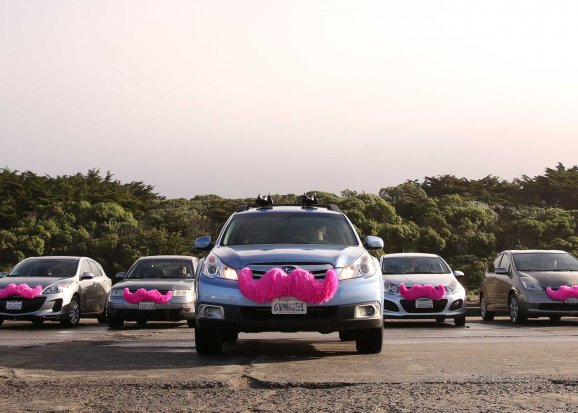
The most recent flashpoint has been a hipster-supported move by the company Lyft to supply a mobile app to connect drivers with riders. Lyft falls outside the regulatory bounds of the Metropolitan Taxicab Commission. Lyft backers want the flexibility that the new approach provides. Cab drivers and companies think it is unfair and unregulated competition. City officials are caught in between.
Umar Lee, a 39-year-old cab driver whose blog post about the controversy was picked up by the Huffington Post, has been accused online of being a “hipster hater,” a charge that he denies. “Some of my best customers, who I love dearly, are among the hipster population,” Lee says.
That said, Lee does think some of these folks get carried away. “Some of them bring new ideas that we need to embrace, but some of them come here as conquerors thinking that everyone needs to bow down to their whims,” he says. “They don’t understand the nuances and complexities, or the fact that the people from here have been thinking about these ideas for decades. It’s not as easy as they think it is to solve a lot of these problems.”
Lee boils down these basic “problems” to transportation, race, and crime. The controversy betweens cabs and ride-sharing is only a small part of a larger issue, he says.
Veteran Alderman Thomas Villa is no fan of the taxi commission and voted against it when he was in the state legislature, saying it was like “taking a cannon to something that needed a rubber band and a paper clip.” He understands the frustration experienced by those with new ideas when facing a regulatory atmosphere, but he also believes “you have to play by a common set of ground rules.”
Villa thinks “Room 200″—Mayor Francis Slay’s office—“has really embraced the younger people in the city. He realizes that’s the future of the city, but there are clearly trade-offs.”
Ogilvie thinks part of the backlash to City Hall stems from a clash of style and pace, more than philosophy.
“Younger people have grown up with the expectation of things being able to happen fast, having access to information, and being able to get information quickly,” says Ogilvie. “There are local government agencies that are not used to publishing information, not used to having to respond and defend what they are doing in any way. Now, there are more communication tools to highlight when agencies look lethargic.”
Back in January during a heavy snow, Room 200 was criticized for not plowing side streets. On January 10, Post-Dispatch columnist Joe Holleman reported that city government leaders “were scoured on Facebook and Twitter” for not doing more to clear the streets. He wrote that “dog-walking, rehabbed-space and loft-living hipsters” were demanding that more be done. This “demographic resides at the core of the ‘first-world problem’ gang who come unglued when their Internet connection is lost and their social media platforms malfunction,” he added.
Holleman’s column triggered Thomas Crone (a contributor to stlmag.com) to pen “An Open Letter to Joe Holleman,” published on nextSTL.com. Crone fired back that hipsters had become “the go-to, ready-made butt of jokes, the perceived-to-be snotty, entitled class of digital natives that’s morphed into a cheap punchline for anti-City rants.” Crone found it “amazing” that “the same people that were desperately sought for years by the city…are now a gag, worth ridicule for, of all things, wanting the best for the city.”
Like much of the country’s other central cities, the growth of the 18-to-35 demographic in the city of St. Louis was noted in the last Census, and it continues to grow. Weiss, who has an eye for architecture and preservation, sees much of the city’s rebirth triggered by this age group. “Cherokee Street owes it all to the hipsters and Latinos,” she says. “Thank God Cherokee Street came back.”
Steve Smith, proprietor of The Royale, believes hipsters should be thanked for using their leverage to agitate for change. “The city needs to be questioned on the status quo,” he says. “I wouldn’t necessarily call the status quo a good thing.”
Smith’s bar is sometimes described as a “hipster hangout.” Yet as he looks around, he says he might see only four or five customers who fit that description. Smith says the term is vague. “Is a 44-year-old guy at Wash. U. working on genome sequencing a hipster because he rides his bike to work?” he asks.
Ogilvie says he gets resistance about bike lanes on city streets, though when he has a full discussion about it, the counterarguments often break down. For example, when bike lanes were planned for Oakland Avenue, between Hampton and Skinker, some constituents complained. “When I asked them, ‘What are you really complaining about?’ there was no good answer,” he says.
Despite the grief he’s received, Lee thinks the cab controversy has been worthwhile. “It opened up a discussion. It was a good thing. It got people talking,” says Lee, who writes a column called “The STL Stranger” in the Evening Whirl, as well as a blog. “The major issue is, do we need more transportation for the people who really need it, or do we need it for people who it’s more or less a play thing?” Lee asks. “We need more bus lines, more MetroLink in the north getting people without transportation to their jobs. That’s the next crisis.”
Meanwhile, blurred lines abound. “I make fun of hipsters, and I make fun of hoosiers,” says Smith. “I have a little bit of both in me, too.”