



St. Charles County has changed considerably over the last 30 years, going from a quiet agricultural community to one of the most rapidly growing areas in the St. Louis area. But outside of the Highway 40/Interstate 70 corridor, the county remains largely the same as it has been for over 100 years. Heading west out on Highway 94 to visit the wineries, many founded by German immigrants has become a summer tradition. And of course, the area is famous for Daniel Boone’s house and grave. But this author discovered, beyond the well-beaten tracks of Highway 94, amazing remnants of the German settlers who came here in the early 19th Century still survive, oblivious of the changes occurring just a few miles away.
The story of how this area became the center of Teutonic immigration, sometimes nicknamed the “Missouri Rhineland” starts with Gottfried Duden, a lawyer from Berg, a duchy in what is now western Germany. As was often the case in the era after the end of the Holy Roman Empire in 1806 and the formation of the German Empire in 1871, the duchy was caught in between opposing political and religious forces. Close to a resurgent France under Napoleon and his successors, as well as lying near important Prussian possessions, the religious lines were also blurry through this part of Germany, with Roman Catholicism and the German Evangelisch-Lutherische Church vying for control. It is not surprising that Duden was interested in coming to America and investing in a more stable place that western Germany. Does the Missouri Rhineland really reproduce the German Rhineland? Maybe a little, but one suspects that Duden’s exhortations in his publications back in the old country were just as much about helping his investments flourish than honest appraisals.
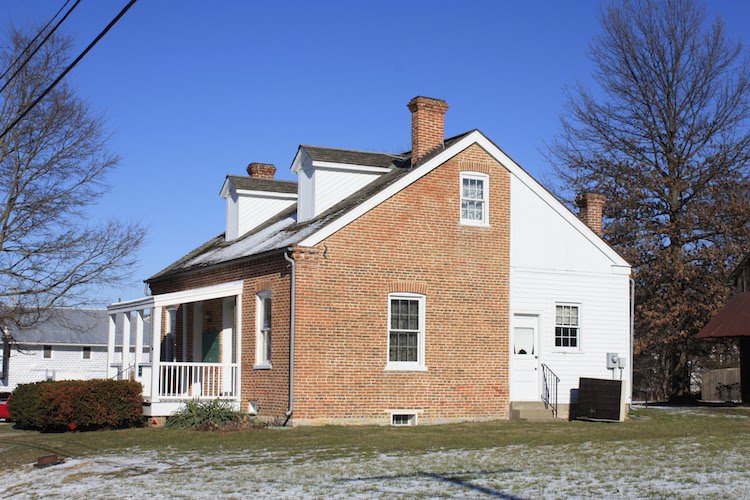
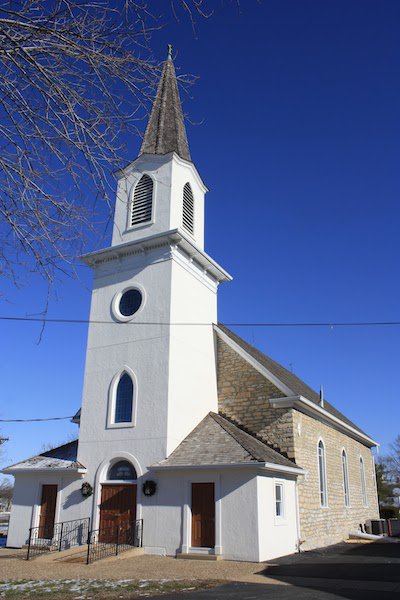
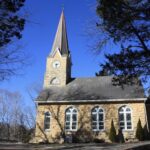
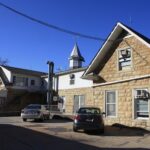
Nonetheless, his salesmanship worked, and thousands of Germans, primarily Lutherans, moved into the Missouri River Valley, into famous riverside towns such as Hermann and Augusta. But up in the hills, towns such as New Melle are just as interesting for their immigrant heritage. Named after a town in the Kingdom of Hanover, immigrants clearly saw naming their town after the one they left as a way of beginning again anew, and hopefully avoiding the mistakes of “Old” Melle. They suffered the same hardships as the citizens of St. Louis, enduring a severe cholera epidemic that devastated the town. Interestingly, some of the architecture of St. Louis, such as flounder houses, also appeared in New Melle. The church architecture of the St. Paul Evangelisch Lutheran church on the edge of town looks suspiciously similar to the Gothic single spired Hallkirchen the immigrants would have left behind in Melle.
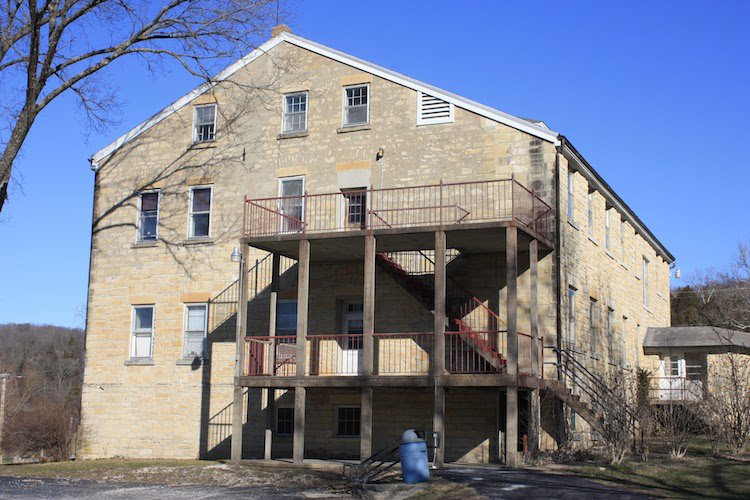
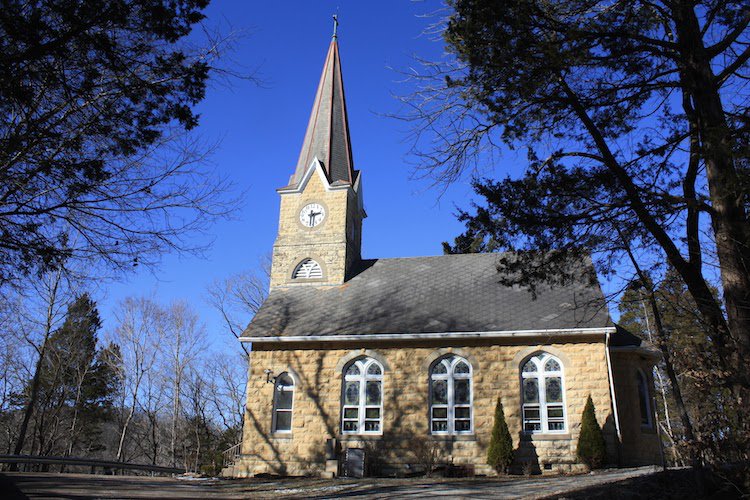
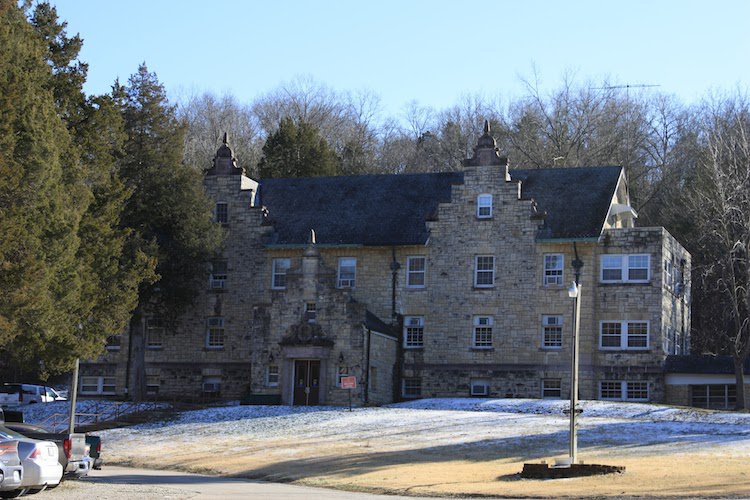
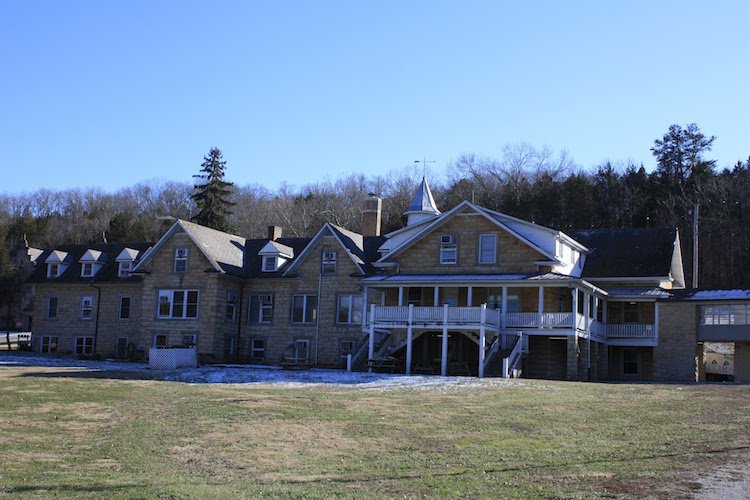
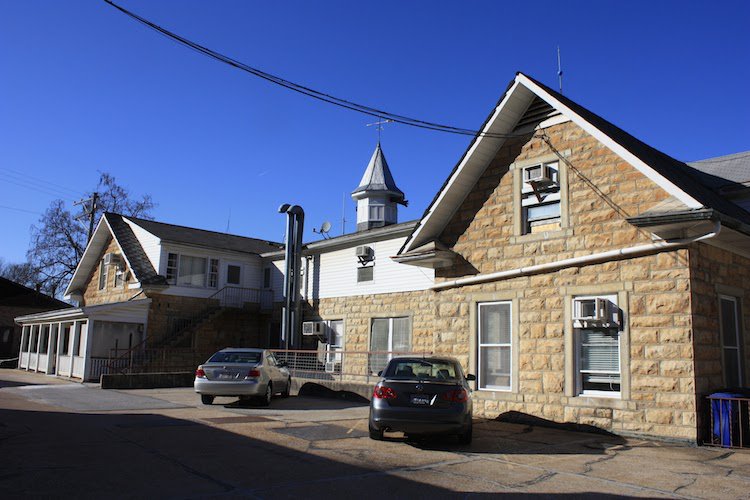
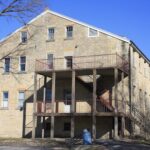
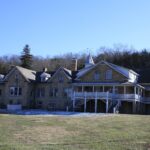
Heading west, towards Marthasville and passing into Warren County, the old Evangelisch Preacher’s Seminary lies in a valley surrounded by forested hills. More famous now as Eden Seminary in Webster Groves, it was first founded here in 1850, with a brief stint in Wellston. The future preachers’ education was not just simply theological, but also consisted of manual labor. The valley certainly provided room for agricultural pursuits. The remaining buildings, where the students lived and worked, look like a cross between German burghers’ houses and American Victorian revival styles. Built of a yellowish limestone, the buildings stretch up into the hills, with the Emmaus church perched high up above the valley floor.
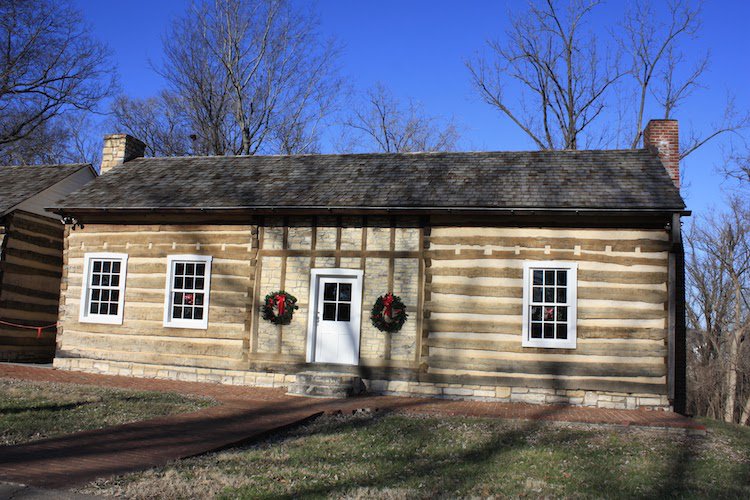
Further on up into the hills past the old seminary is Marthasville, which still possesses a couple of log cabins harkening back to the early years of settlements. The terrain is rugged, and the town’s planners proceeded with a standard grid that lies over the topography with little respect for nature. But that is what makes the town wonderful; the streets swoop up and down the valleys and ridges, past the old log cabins and Queen Anne style houses. The views looking out over the river valley are spectacular, and one can see why immigrants would move to such a beautiful setting.
But for this author, a little bit of a sense of sadness hangs over these quaint little towns. The German heritage of America seems to be slowly fading away, as what was once considered distinct is now just normal. Perhaps that is the great irony of German immigration; people arrived in such huge numbers, and became so influential, that we forget how much they originally contributed to American culture. Likewise, old names change: the Evangelisch-Lutherische Church is part of the United Church of Christ, its German name relegated to history books and faded lettering carved into stone. But at least out on the narrow roads of St. Charles and Warren counties, the legacy of German immigration still holds on.
Chris Naffziger writes about architecture at St. Louis Patina. Contact him via email at [email protected].